
City Engages with Cicero Institute on New Initiative for Homelessness
During the City Council’s recent work session, a key inquiry was about whether Mayor Kirk Watson and the city's Homeless Strategies and Operations (HSO) department had held discussions with the Cicero Institute, a conservative think tank known for advocating policies addressing homelessness.
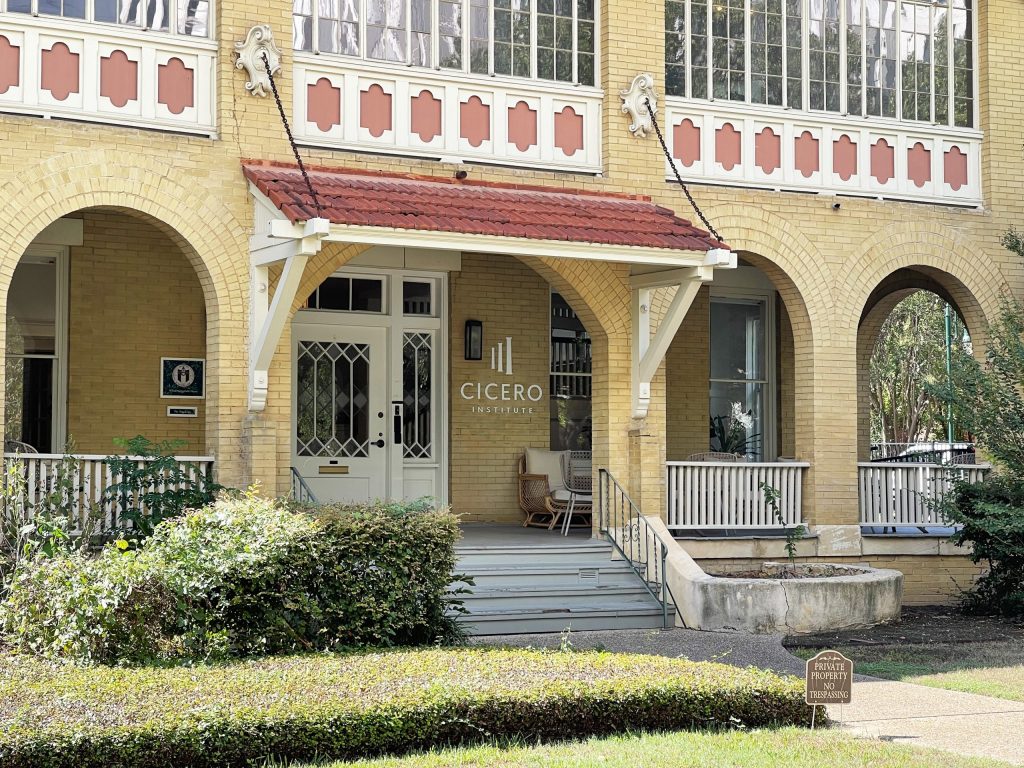
During the City Council’s recent work session, a key inquiry was about whether Mayor Kirk Watson and the city’s Homeless Strategies and Operations (HSO) department had held discussions with the Cicero Institute, a conservative think tank known for advocating policies addressing homelessness.
Mayor Watson, who was absent from the session due to travel, informed the Austin Chronicle that his office had not interacted with the Cicero Institute concerning the No Wrong Door initiative. This program, which launched earlier this spring, aims to assist individuals with complex mental health challenges, who often cycles through homelessness, jails, hospitals, and back onto the streets.
However, David Gray from HSO stated during the council meeting that he had indeed met with both the Cicero Institute and the Texas Public Policy Foundation, another conservative organization. Gray emphasized that his office engages with a range of political perspectives to educate others about their initiatives, aiming to find advocates for the causes supported by the city. Carrie Rogers from the city’s Government Relations office confirmed her attendance at similar meetings.
These revelations have sparked criticism from Austin’s advocacy community, which views the Cicero Institute’s strategies as harmful, particularly in relation to initiatives that allegedly criminalize homelessness. Advocacy groups like VOCAL-TX have raised awareness of the Cicero Institute and its founder Joe Lonsdale, a tech entrepreneur with controversial views, including calls for punitive measures against homelessness.
The issue gained traction after VOCAL-TX member Cate Graziani communicated to the Council that she had learned of monthly discussions between the mayor’s office, HSO, and the Cicero Institute. Alongside her email, she attached a letter from the ACLU and local public defenders expressing apprehensions regarding the Austin Police Department’s involvement in the No Wrong Door program. This letter outlined concerns that APD officers had approached incarcerated individuals for their signatures on program-related documents without legal representation present, potentially jeopardizing their civil rights through data collection shared with city and county officials. The letter urged policymakers to reconsider APD’s role in the program or implement protections for participant rights.
Moreover, the letter noted that the city’s Government Relations team is collaborating with state lawmakers on potential legislation aimed at reforming Texas’s approach to individuals with psychiatric challenges and substance abuse issues. It referenced a separate communication from Mayor Watson to state Senator Lois Kolkhorst, proposing modifications to legal standards for involuntary psychiatric treatment for those in outpatient programs, a key goal supported by the Cicero Institute. Notably, advocacy organizations also expressed partial support for No Wrong Door, acknowledging its intention to coordinate housing and support services for those with intricate behavioral health needs.
The Council meeting presented No Wrong Door as an innovative program that integrates various agencies to formulate personalized support plans for vulnerable individuals in the community. A recent Meadows Mental Health Policy Institute study indicated that 950 residents in Travis County, categorized as ‘high utilizers,’ frequently cycle through jail, hospitals, and homeless services. These high utilizers comprised 2% of total arrests between 2021 and 2025 but accounted for one-sixth of those arrests. Many struggle with homelessness, with over half having mental health or substance use disorders, and the system reportedly incurs around $144,000 in costs per individual, totaling $137 million annually.
City staff indicated that No Wrong Door is already yielding favorable results, with APD’s chief of strategic initiatives reporting that services were initiated for 99 high utilizers in May. Following this, data indicated a 31% reduction in calls to police from program participants. For the most vulnerable individuals, calls decreased by as much as 57%.
Despite these statistics, many community members voiced concerns about the ethical implications of the program’s surveillance aspects. Comments during the session highlighted the risk that medical providers may unintentionally facilitate law enforcement instead of purely offering care. City officials, including Herold, recognized the importance of addressing these civil rights issues, with Gray stating that the commitment to addressing homelessness must balance public safety needs with the dignity and autonomy of individuals affected.
Herold underscored the critical situation faced by vulnerable women experiencing homelessness and mental illness, citing instances of individuals like ‘Mary,’ who have endured systemic failures over the years. In closing, city representatives expressed commitment to refining the No Wrong Door program in light of civil rights concerns, highlighting the complex nature of involuntary treatment discussions as a means of ensuring necessary care for the most affected individuals.



Comments
No comments yet.