
Arch Manning’s Future in Question Amid Mixed Performances and Criticism
As soon as you arrived at Austin–Bergstrom International Airport last week, you were met with signs declaring it was 'the biggest weekend ever.' Though the main attraction was the Formula 1 United
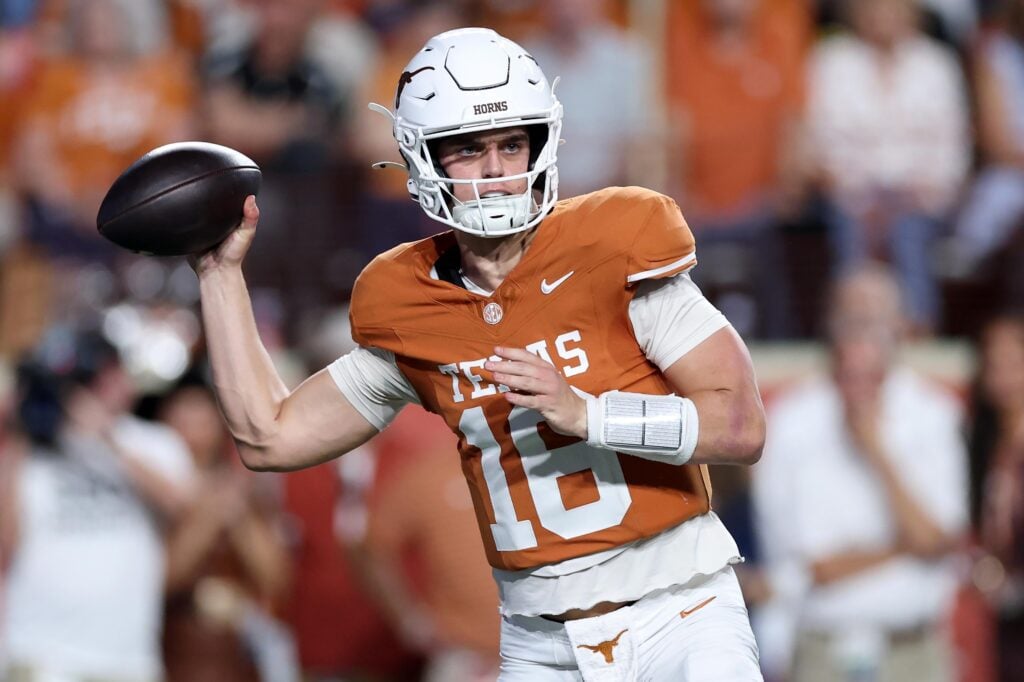
As soon as you arrived at Austin–Bergstrom International Airport last week, you were met with signs declaring it was ‘the biggest weekend ever.’ Though the main attraction was the Formula 1 United States Grand Prix — which was the focus of my visit — two notable events were also highlighted: The San Antonio Spurs facing the Houston Rockets and the Texas Longhorns hosting the Ole Miss Rebels on Saturday night.
Typically, a Longhorns game garners top billing in Austin and throughout Texas, but this time, it was deemed an undercard. Following two consecutive losses for Texas — first against Oklahoma in the Red River Rivalry and subsequently to Florida — the team was under significant pressure.
The burden fell heavily on quarterback Arch Manning.
Texas eventually secured a victory against Ole Miss in overtime, but Manning’s performance served as a snapshot of his current situation and raised questions about his future prospects.
After a long day at the Circuit of the Americas, I returned to my hotel room and tuned into the matchup between Texas and Ole Miss, catching a pivotal moment:
A fumble was forced by Ole Miss, resulting in their first touchdown, and Manning was involved.
While one might critique Manning for needing to react quicker under pressure, sometimes external factors like a beaten left tackle lead to mishaps, which in this case contributed to Ole Miss staging a comeback after trailing early.
Tied in the fourth quarter, another crucial play occurred:
With the score equal at 24-24, Manning made a risky deep throw under pressure, resulting in an interception — a decision seen as detrimental by fans and analysts alike. This situation mirrored an earlier costly interception against Oklahoma that allowed the Sooners a late-game opportunity.
Such mistakes are pivotal, revealing a quarterback’s judgment, awareness, and ability to guide their team to victory or to undermine those efforts. While Texas managed to surmount Ole Miss, the earlier game against Oklahoma showcased Manning’s problems.
Despite these issues, there were flashes of brilliance, indicative of a player who could potentially be a top draft pick, such as a 50-yard touchdown to Ryan Wingo against Ole Miss, demonstrating composure under duress and a precise throw downfield.
However, other plays demonstrated his tendency to falter when pressured, including an interception against Tennessee that showcased a miscalculation while attempting a deep throw into double coverage.
These errors are concerning for a quarterback in his second season, especially someone projected as a future No. 1 NFL pick.
There has been noticeable fluctuation in Manning’s draft stock recently. Initial expectations positioned him as the frontrunner for the first overall pick, but with the emergence of other prospects, particularly Drew Mestemaker, Manning’s stock has begun to slip. If current trends continue, this decline could worsen.
A similar scenario unfolded last season when early struggles diminished his stock, only for him to rebound later. The question now arises: could a similar resurgence occur this time?
Speculation about Manning’s potential next steps has intensified, with discussions regarding whether he might consider finishing his collegiate career elsewhere. Just a few months ago, the idea of him returning to college appeared far-fetched, but his recent performance anomalies have led experts to suggest he may benefit from exploring a different offensive environment.
Jordan Palmer highlighted on ESPN that the play-calling at Texas is hindering Manning’s growth. He noted that half of his throws are either too safe or overly ambitious, creating challenging circumstances that contribute to interceptions.
Numerous schools have been suggested as potential new homes for Manning, including Ole Miss — where his family legacy lies — and LSU, which could provide a nurturing offensive environment.
Current Texas head coach Steve Sarkisian, known for his offensive creativity, faces increasing scrutiny regarding quarterback development. Past recruit Quinn Ewers, originally anticipated to reach NFL stardom, fell to the seventh round of the 2025 draft, raising concerns about Sarkisian’s ability to develop talent.
Prominent sports figures like Paul Finebaum have criticized Sarkisian, claiming he is failing to maximize Manning’s potential, dubbing the situation an absolute disaster. Finebaum reflects on the tension mounting amidst the overflow of talent at Texas, directing blame toward Sarkisian’s play-calling and game management.
Brian Kelly has similarly expressed concerns about the handling of Manning’s development, emphasizing that the offense should adapt to his abilities rather than confining him within restrictive parameters.
A strong finish to the season could mitigate these concerns, yet the pressure rises as both Manning and Ewers’ development stagnates under Sarkisian. While signs of promise remain, the inconsistency could impede NFL evaluators’ confidence, leading to speculation about whether Manning may choose a different collegiate path next year.

Comments
No comments yet.