
Concerns Raised Over Possible Cicero Institute Influence in Austin’s Homelessness Strategy
Activists in Austin are expressing alarm that the Cicero Institute, a think tank associated with the Trump administration, may have exerted considerable influence over the city's new homelessness program, which critics fear could increase the criminalization of homeless individuals.
Activists in Austin are expressing alarm that the Cicero Institute, a think tank associated with the Trump administration, may have exerted considerable influence over the city’s new homelessness program, which critics fear could increase the criminalization of homeless individuals.
Documents from City Hall indicate that the Cicero Institute, founded by tech billionaire Joe Lonsdale, engaged in several discussions with city officials while formulating the No Wrong Door program earlier this year. The Texas Public Policy Foundation, another conservative policy group, participated in some of these meetings.
City officials have publicly refuted claims of significant involvement with Cicero regarding this program. The city’s legislative director emphasized that consulting stakeholders with diverse perspectives is standard when drafting policies.
However, critics argue that the city neglected to include local advocacy organizations that directly support Austin’s homeless population and prefer alternative strategies. The Cicero Institute advocates for policies favoring involuntary treatment for those with mental health and addiction issues, which contrasts with the city’s traditional “housing first” philosophy focused on providing stable housing to the unhoused.
Cate Graziani, co-director of Vocal-TX, commented, “No Wrong Door seems to directly mirror the Cicero playbook.”
The Cicero Institute, along with Lonsdale, has reportedly influenced the Trump administration’s homelessness strategies, promoting ordinances that criminalize public camping. Critics argue that such measures further marginalize homeless individuals.
Austin had lifted its camping ban in 2019 but reinstated it in 2021, coinciding with a statewide ban in Texas. Council Member Mike Siegel shared his concerns about the Cicero Institute’s involvement, highlighting the organization’s opposition to housing-first policies in Austin. He stated, “Instead of listening to the Cicero Institute, we should collaborate with people working on the ground to improve conditions for the unhoused.”
In early October, Austin Legislative Director Carrie Rogers indicated that city staff met with Cicero officials to discuss homelessness strategy but asserted that the group did not influence the No Wrong Door program’s development. Rogers defended the meetings, suggesting that engaging with organizations valued by Republican leaders could help secure funding. She noted that the city’s goals for No Wrong Door would largely remain unchanged after recent elections resulted in a shift in the state’s political landscape.
Launched in April, the No Wrong Door initiative was created to assist individuals with severe mental health challenges to avoid homelessness and incarceration. Numerous local entities, including law enforcement and mental health service providers, collaborated with the city in developing this initiative.
Reportedly, the program has shown early positive results, including reduced interactions with police and emergency services as well as more connections to stable housing.
A spokesperson for Cicero stated that while they met with city officials regarding No Wrong Door, they did not participate in its planning or design. They noted that the initiative appears beneficial for Austin’s homeless individuals facing complex mental health challenges, suggesting it is already more effective than previous methods.
Soon after its implementation, critics raised concerns about the program’s reliance on police officers to facilitate connections to treatment and services for participants. Despite city officials defending the police’s engagement, opposition remains due to fears that involving law enforcement may lead to increased criminal charges against vulnerable individuals.
Internal city communications reveal ongoing discussions between city staff and the Cicero Institute regarding legislative actions relevant to homelessness policies, including mental health and treatment capacity expansions.
The Cicero Institute continues to advocate for reducing barriers to involuntary treatment for individuals experiencing homelessness, a stance raising civil rights concerns among some advocacy groups.
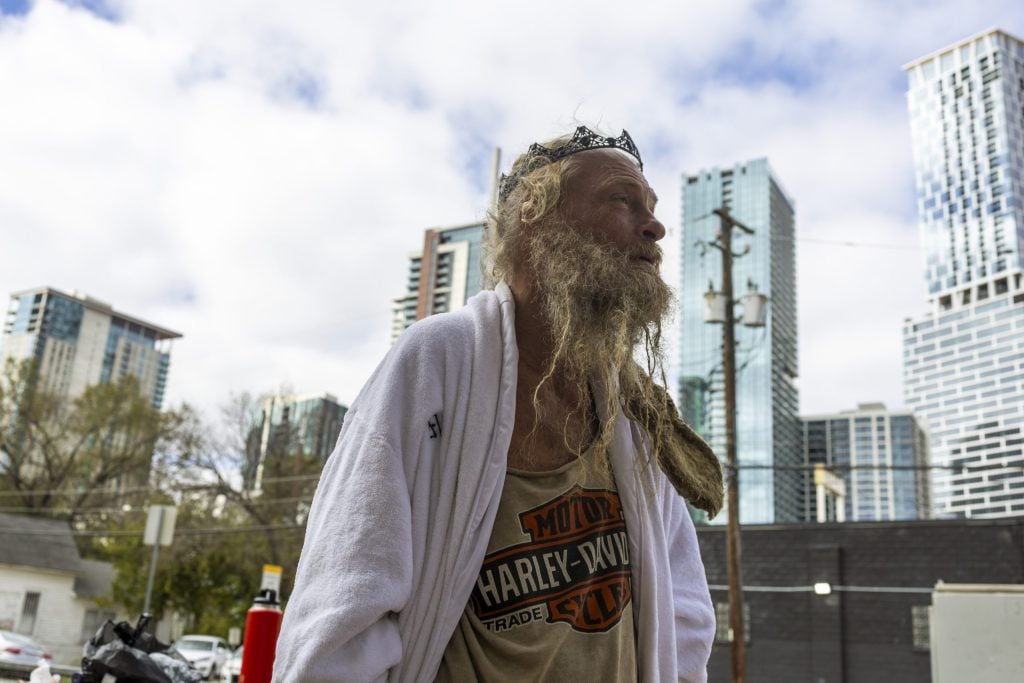
In response to state pressures to enforce camping bans, the city has recently ramped up its encampment clean-up efforts, affecting individuals like William Childress, who has a long history of experiencing homelessness. He expressed his frustration over lost belongings after the city cleared his encampment despite his attempts to find help.
Overall, as the Austin City Council continues to address these concerns by integrating more advocacy and legal defense groups into the No Wrong Door initiative, questions linger about the original involvement of the Cicero Institute and its implications for Austin’s homeless population.



Comments
No comments yet.