
Austin City Council Approves Updated Wildfire Protection Plan Amid Housing and Tree Cover Concerns
Last Thursday, Oct. 22, the Austin City Council passed an update to the Community Wildfire Protection Plan (CWPP) despite concerns regarding its potential conflicts with housing density and tree cover initiatives.
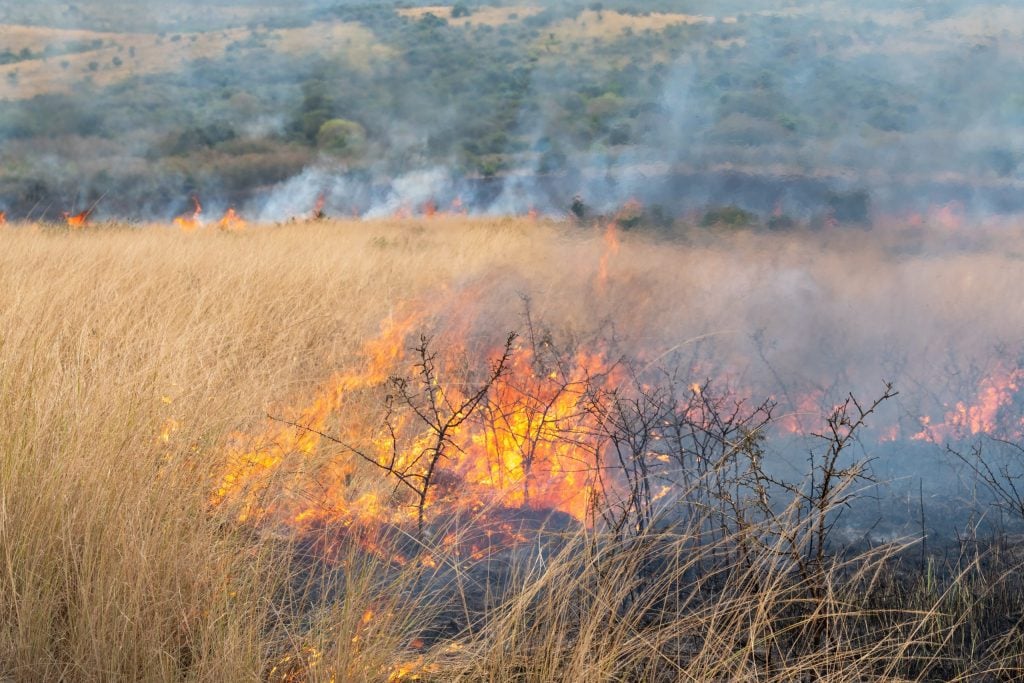
Last Thursday, Oct. 22, the Austin City Council passed an update to the Community Wildfire Protection Plan (CWPP) despite concerns regarding its potential conflicts with housing density and tree cover initiatives. The Travis County Commissioners Court also approved the plan, which is set to begin implementation in early November.
The CWPP, a 413-page document revised every ten years, aims to help Austin and Travis County establish plans for wildfire mitigation, preparedness, response coordination, and resilience. Originally created under the Healthy Forests Restoration Act of 2003, the plan is a collaborative non-regulatory effort developed with input from residents, property owners, and landowners, according to city officials. Council Member Marc Duchen noted during an Oct. 20 work session that the city was overdue for an update, emphasizing the evolution of wildfire prevention strategies.
According to the 2026 Wildfire Risk Report by Cotality, Austin is ranked fourth in the nation for properties at moderate or higher wildfire risk, following three cities in California. The CWPP identifies eastern and southeastern Austin as areas most susceptible to fast-moving grass fires due to dry land following winter freezes, while the western areas are characterized by hilly woodland terrain with limited escape routes. Since 90% of wildfires are human-induced, the focus is on the Wildland-Urban Interface (WUI) where nearly half of Travis County residents reside.
The plan includes 71 voluntary recommendations related to vegetation management, home hardening to reduce fire risk, fire alerts, post-fire watershed recovery, and potential code changes. Although there is no specific funding for the plan, its existence is necessary for the city and county to apply for Community Wildfire Defense Grants from the U.S. Forest Service.
Austin’s Wildland-Urban Interface Code, adopted in 2020 and updated in 2025, mandates certain fire prevention upgrades for new or significantly remodeled homes in WUI zones, specifically those adjacent to wildland areas of 40 acres or more. However, this limitation excludes many small greenbelts and wooded areas in central Austin. About 71% of the WUI boundary in Austin, or 650 linear miles, is privately owned, complicating the CWPP’s voluntary approach.
Council Member Krista Laine raised concerns about the engagement with large private landowners in East and Southeast Austin. Interim Assistant Chief David Skowron from the Austin Fire Department acknowledged the challenges in addressing these private landowners and affirmed the emphasis on home hardening as a crucial aspect of wildfire risk management.
A city survey revealed that 77% of 377 residents expressed concern about wildfires near their homes, with 32% citing costs as a significant barrier to home hardening. Many residents showed interest in a cost-sharing program to facilitate participation in the plan.
Proposed setbacks of 50 feet between structures, including accessory dwelling units (ADUs), were flagged by Mayor Pro Tem Chito Vela as a potential conflict with existing housing initiatives aimed at increasing density. Interim Fire Chief Tom Vocke supported the idea that such separation might only make sense in the highest risk areas.
Another criticism came from Bill Bunch, executive director of the Save Our Springs Alliance, who described the plan’s focus on thinning tree cover as influenced by unscientific interests and urged for the protection of mature forests instead. Despite the plan acknowledging the ecological benefits of tree canopy preservation, it suggests that such efforts must align with vegetation management in wildfire-prone areas.
The plan also acknowledges potential conflicts between wildfire mitigation and other environmental regulations, noting the trade-offs between reducing wildfire risks and maintaining watershed health. Implementation begins on Nov. 6 with a coalition kickoff at Austin Energy Mueller headquarters, where various task groups will address the recommendations. The effectiveness of the plan will ultimately depend on the commitment of Austin and Travis County to transform these recommendations into action and secure funding.



Comments
No comments yet.