
Austin ISD Board Finalizes Attendance Zones and Improvement Strategies
On Thursday, Oct. 29, the Austin Independent School District (AISD) Board of Trustees officially approved plans aimed at enhancing 26 campuses that are currently rated as low-performing.
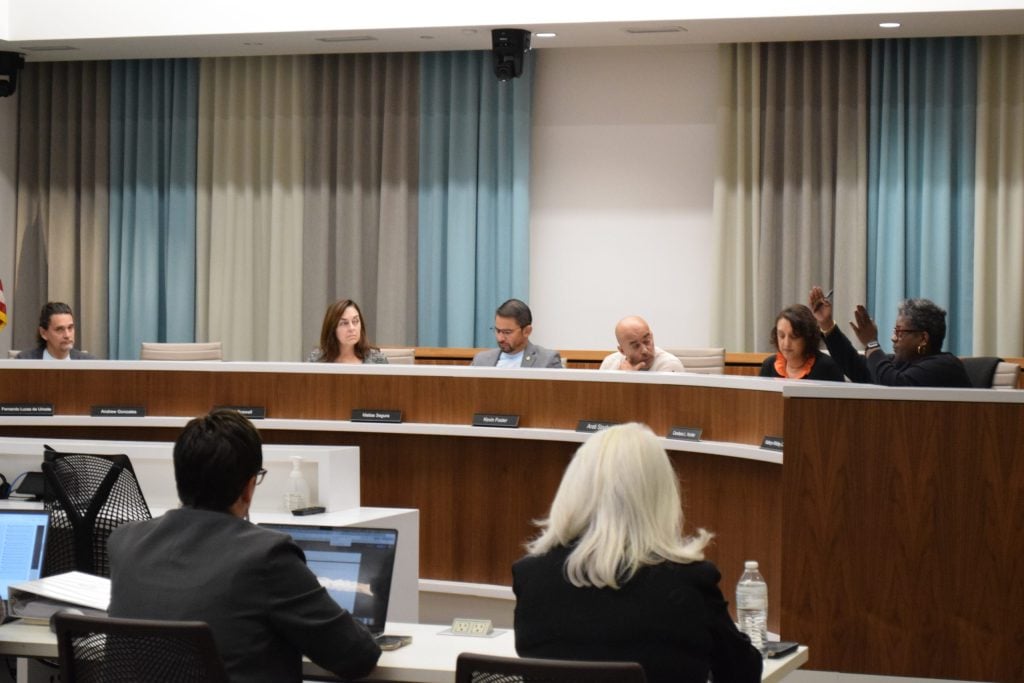
On Thursday, Oct. 29, the Austin Independent School District (AISD) Board of Trustees officially approved plans aimed at enhancing 26 campuses that are currently rated as low-performing. For the first time, an attendance area has been set for General Marshall Middle School in Northeast Austin, and adjustments were made to the boundary of the overcrowded Linder Elementary.
Last fall, the district undertook a significant project to redefine school attendance boundaries, but ultimately rejected their proposed map. While only two new boundary changes may appear minimal, they will determine the school assignments of hundreds of East Austin students for the 2027-2028 academic year.
A section in the southeast Riverside neighborhood will now be assigned to Travis Heights Elementary, which is considered the highest-rated option in the vicinity, while Linder remains one of the district’s older facilities, constructed in 1939.
The revised boundary for Marshall covers a substantial area of East Austin surrounding Mueller, extending from Martin Luther King Jr. Boulevard to U.S. Highway 290, and further east to Colony Park and Overton Elementary. Students from those areas presently attending Dobie, Webb, Kealing, and Lamar middle schools can choose to stay through their current middle school education.
During the initial presentation of the school zone changes on Oct. 15, Trustee Kevin Foster highlighted that Marshall, which opened in 2023, was established to promote the integration of the Mueller neighborhood with the broader Eastside. He regarded the assignment of additional East Austin neighborhoods to Marshall as an important development.
However, the new zoning split Mueller along Berkman Road, a concern raised by community members. Portions of west Mueller now fall under Kealing’s jurisdiction, despite Marshall being located just blocks away. Foster expressed a desire for children in Mueller to have the option to opt into Marshall.
In addition to the attendance zone changes, trustees on Oct. 29 also ratified school improvement initiatives. Back in late August, the Texas Education Agency identified certain D- and F-rated schools that required improvement plans, which include six schools that necessitate significant restructuring. These are Allison, Cook, Harris, Menchaca, and Walnut Creek elementaries, in addition to the Rosedale School for special education. Several other campuses will be implementing targeted improvement plans.
Beyond the mandated plans, schools including Brown, Campbell, Davis, Kocurek, Oak Hill, Ortega, Padrón, Patton, Travis Heights, Wooldridge, and Zavala elementaries, plus General Marshall, Lively, Mendez, O. Henry middle schools, and Garza Independence High School, are expected to establish new academic goals.
AISD must finalize and submit these improvement plans prior to the Texas Education Agency’s deadline of Nov. 21. Last year, 27 turnaround plans were active, with 18 schools achieving improved accountability ratings by August 2026, as noted by district officials.
Trustee Candace Hunter remarked on the need for greater parental involvement, citing limited feedback on current plans and indicating that parents should have clearly defined roles in every turnaround effort.
Additionally, at the Oct. 29 meeting, the trustees addressed a proposed policy concerning artificial intelligence, which is set for a vote on Nov. 12. Trustee Arati Singh mentioned existing bans in public school systems in New York and California, and noted the requests from AISD students for a public AI policy.
Board President Lynn Boswell recalled his early concerns regarding AI in schools back in 2023 and emphasized the urgency of establishing guidelines given the rapid evolution of the situation.



Comments
No comments yet.