
Reviving Hell House: A Reflection on Time and Culture
The passage of time can significantly alter how we view events from the past.
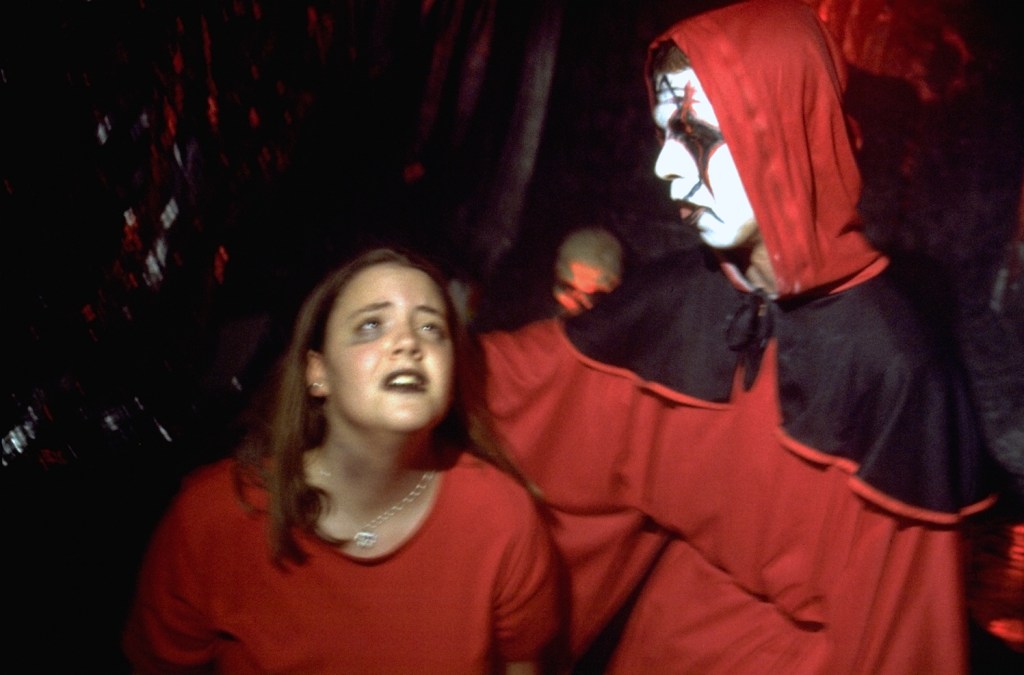
The passage of time can significantly alter how we view events from the past. What might have seemed outrageous or far-fetched 25 years ago can now appear remarkably insightful and timely. This shift in perception is part of the narrative surrounding the recent restoration of the documentary film Hell House.
Originally made in Texas, Hell House debuted in the U.S. at the 2002 SXSW Film Festival, following a canceled premiere at the Toronto International Film Festival on September 11, 2001 due to the day’s events. Directed by George Ratliff, who previously resided in Austin, the film explores the Halloween hell house organized by the Cedar Hill Trinity Church in the Dallas suburbs. This church, part of the Assemblies of God denomination, showcased a production that depicted extreme consequences of typical youth behaviors, including drinking, dancing, suicide, and premarital sex, through dramatized vignettes.
The project involved months of preparation, with both teens and adults eager to take on roles, resulting in a production executed with the professionalism and fervor found in theatrical endeavors. Cedar Hill Trinity Church claims to have initiated the hell house trend, later even distributing kits to assist other churches in staging similar performances.
Although the church has not held these Halloween performances for roughly five years, this absence has seemingly influenced the Austin-based American Genre Film Archives (AGFA) to release the Blu-ray of the film this month. Hell House was screened at Fantastic Fest 2026, and in a recent conversation, Ratliff noted the film’s continued relevance.
Ratliff discovered the Cedar Hill hell house while living in New York after reading about it in a newspaper article in 1999. The controversial inclusion of a vignette based on the Columbine shooting contributed to the phenomenon’s national attention. Following this discovery, Ratliff and his director of photography, Jawad Metni, traveled to Texas to secure filming rights from the church, leading to the creation of a 10-minute short to attract funding for a full-length feature, supported enthusiastically by the church in 2000.
Unlike traditional haunted houses filled with monsters, the church presented graphic and disturbing representations of sinful activities and their dire outcomes. Ratliff stated, “I was in New York, destroying dinner parties, telling people about this thing that was happening. I wanted to showcase its reality.” He believes AGFA’s decision to re-release the film stems from a belief in the timely relevance of the material.
The church members were eager to film their performance and granted Ratliff extensive access. He explained that Pentecostals are known for their theatricality, historically excelling in performances aimed at attracting congregants. Their mission was centered around persuading attendees to seek salvation, often through fear-based narratives.
AGFA’s Blu-ray restoration, taken from the original 16mm negative, features commentary from Ratliff, co-producer Zachary Mortensen, director of photography Jawad Metni, and editor Mike LaHaie. The release also includes outtakes, the film trailer, an episode from This American Life, along with additional shorts. The Blu-ray is available for pre-order on the AGFA website.
Comments
No comments yet.