
Texas Longhorns Struggle to Maintain Momentum After Halftime
AUSTIN, TX - OCTOBER 24: Texas Longhorns head coach Steve Sarkisian on the sideline during the SEC football game between the Texas Longhorns and Ole Miss on October 24, 2026, at Darrell K Royal-Texas Memorial Stadium in Austin, TX.
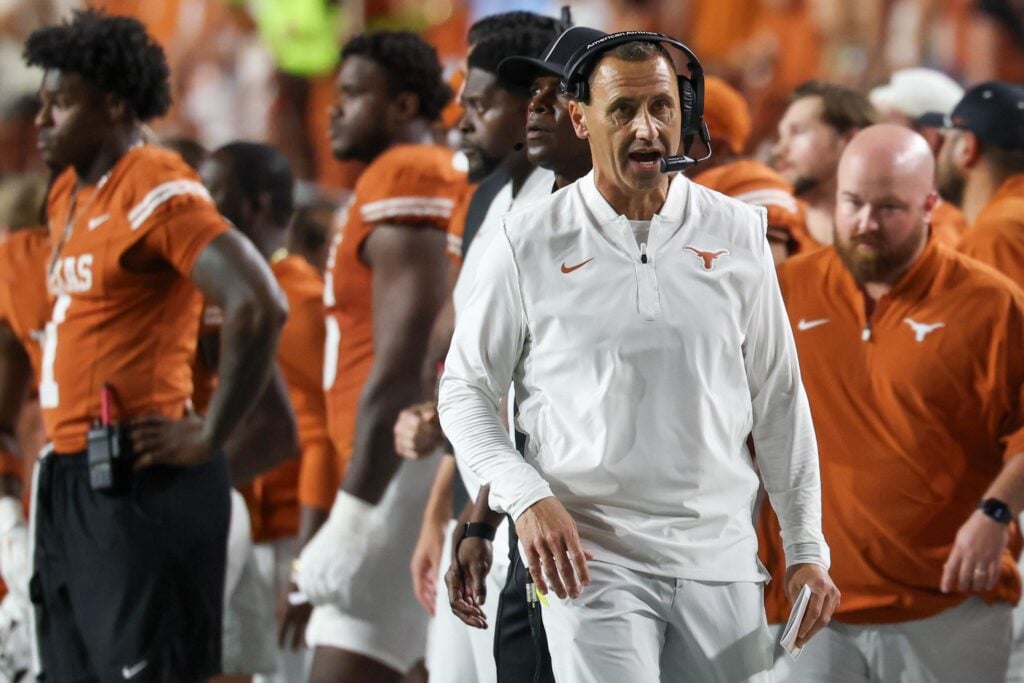
AUSTIN, TX – OCTOBER 24: Texas Longhorns head coach Steve Sarkisian on the sideline during the SEC football game between the Texas Longhorns and Ole Miss on October 24, 2026, at Darrell K Royal-Texas Memorial Stadium in Austin, TX. (Photo by David Buono/Icon Sportswire via Getty Images) | Icon Sportswire via Getty Images
Texas Longhorns head coach Steve Sarkisian approaches halftime as a pivotal moment akin to a second kickoff, initiating staff discussions, making necessary adjustments, and equipping players with initial plays for the second half, similar to pre-game openers. However, this approach, effective in previous seasons, has not translated to success this year after five seasons of a winning strategy.
In the six games since the season opener, Texas has gained a total of 37 yards on the opening snap of its first second-half possession, with 15 subsequent snaps resulting in a loss of 10 yards. This totals 27 yards across 21 plays without scoring a point, in contrast to three touchdowns and a field goal achieved in the first possessions of the same games.
During the match against Ole Miss, Texas, who led 24-3 at halftime, quickly encountered difficulties. An unsportsmanlike conduct penalty following the touchback placed them at their own 12-yard line. Soon after, Arch Manning was stripped by Blake Purchase, leading to a fumble recovery by Kam Franklin in the end zone. Ole Miss outperformed Texas 14-0 in the quarter, gaining 63 yards to Texas’s 19.
The situation worsened as, just a minute into the fourth quarter, Texas’s 21-point lead evaporated. Despite this setback, Texas managed to win the game 34-27, but only after regaining a lead for the second time.
The ongoing challenge in the third quarter has been evident. After seven games, Texas holds a record of 5-2 overall and 2-2 in SEC play, managing to outscore opponents in every quarter except for the third. As of October 28, the team ranks 110th nationally and last in the SEC for third-quarter scoring, averaging only 3.9 points per game, with the bulk of those points coming in a dominating 59-7 win against Texas State. Over the following six games, opponents have outscored the Longhorns 37-6 in the third quarter, with a margin of 31-3 in SEC games.
A look at the possession count indicates ongoing issues: Texas has experienced nine three-and-outs on 23 drives during the third quarter, a 39 percent failure rate compared to 21 percent across other quarters. Against SEC opponents, the situation has only worsened, with a three-and-out rate of 53.8 percent.
Despite what the score reflects regarding defense, it is worth noting that 14 of Texas’s 37 points allowed came from Tennessee’s punt-return touchdown and Ole Miss’s fumble recovery. The struggles on offense and special teams have translated into damaging results from stalled possessions.
Texas has not scored on its first possession of the second half in six consecutive games, with the opener being the only exception where they managed to do so.
Sarkisian elaborated on the routine followed after halftime during a meeting, which involves staff discussions, unit adjustments, film analysis with the players, and establishing initial calls for the second half. He noted, “Just like we would have openers to start the game, here’s what we’re going to call in the second half, and that’s probably on offense the most frustrating part… It just hasn’t been that way this year.”
Although he has found success in previous seasons—having outscored opponents in third quarters 506-295 over 68 games including postseasons—he acknowledges the need for potential modifications, stating he is “not opposed to making subtle tweaks and changes to what we do at halftime,” with possible adjustments planned for the upcoming Saturday game.
Specific offensive failures have also emerged. In the game against Florida, Texas reached a third and one on their first possession of the second half, only to lose three yards on a running play. In four SEC games, the team has only converted 2 of 14 third downs in the third quarter, highlighting broader issues connectivity and execution under pressure.
Rushing statistics tell a similar story, as Texas has managed only 24 yards on 30 carries during third quarters in conference play, excluding five sack attempts. If these are set aside, the team still averages just 2.6 yards per run.
An illustrative example arose from Texas’s second possession against Ole Miss, where a broken mesh route concept contributed to yet another failed play, reflecting broader problems with execution under pressure. These failures cannot solely be assigned to personnel changes, as breakdowns occurred at multiple levels throughout the play.
Reviewing losses against Florida, Texas had limited offensive success against six-man pressures, resulting in delayed plays and protection failures on deep passing attempts.
While third-quarter scoring struggles paint a troubling picture, it is essential to recognize that momentum can sometimes be obscured by the quarter breakdown. Texas orchestrated a touchdown drive against Ohio State following a costly turnover, showcasing potential, albeit after trailing. In their game against Ole Miss, the go-ahead touchdown stemmed from a strong running performance that benefited from favorable blocking angles.
While Texas has demonstrated resilience, having recovered from setbacks, it remains to be seen if they can generate offensive drives before leading margins diminish. Currently ranked No. 11 in the AP poll and facing Mississippi State at home, the Longhorns must solidify protection, refine route timing, and improve execution in short-yardage situations to safeguard against further losses that could jeopardize their playoff ambitions. Previous close calls highlight the precarious nature of their current situation as they strive for improvement.



Comments
No comments yet.