
The Former Spy’s Return to Austin: A Tale of Intrigue
The meeting was scheduled for 3 PM in the lobby of the Westin Austin Downtown, coinciding with the final day of the Austin Film Festival.
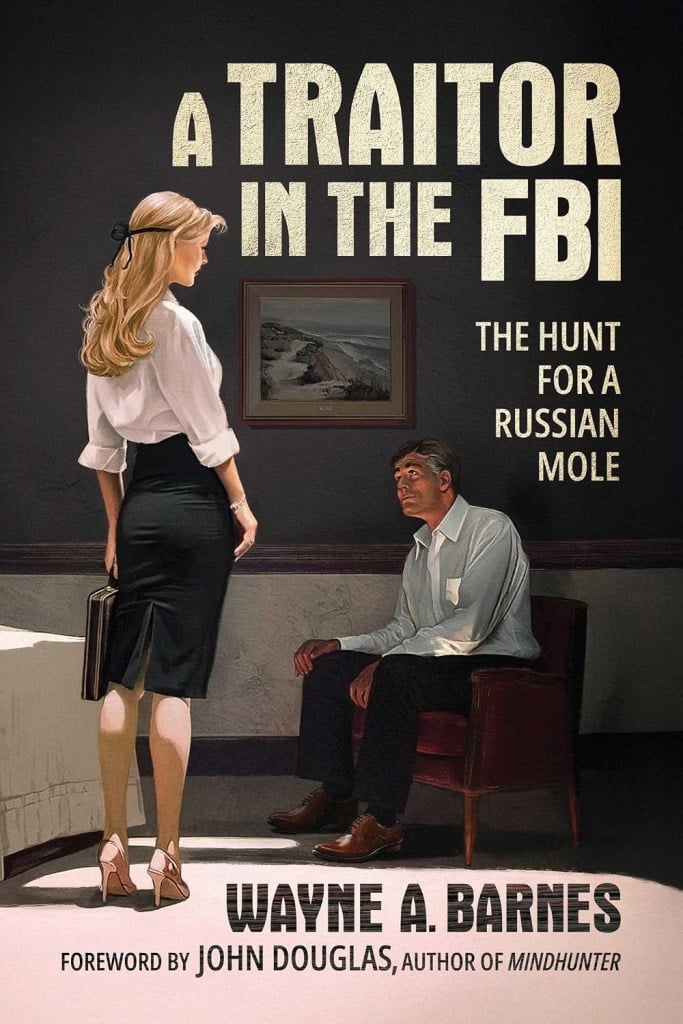
The meeting was scheduled for 3 PM in the lobby of the Westin Austin Downtown, coinciding with the final day of the Austin Film Festival. Following this, we planned to move to a quieter booth in the restaurant. Wayne Barnes, the individual I was there to interview, gazed out the window as we began discussing the transformations in Austin since his last visit 28 years prior. His time here had made a lasting impression, enough to inspire his recent book titled A Traitor in the FBI: The Hunt for a Russian Mole.
The Austin Film Festival’s PR team had initially brought Barnes to my attention weeks earlier, informing me that the retired spy catcher had a significant story to share. Now residing in Florida, Barnes lectures on security and applies his expertise in art fraud detection. However, back in 1998, he and Polly Platt, a Hollywood producer and board member of AFF, were integral to one of the most notable spy investigations in U.S. history, which took place at the Omni Hotel during the festival.
The case centered around identifying a mole within the FBI, ultimately revealed to be Robert Hanssen, an agent in the bureau’s Soviet analytical unit. His two decades of betrayal were later depicted in the 2007 film Breach, while Barnes chronicles his involvement in the case, as well as Platt’s connections to the AFF. At the festival, he even met with Billy Ray, co-writer and director of Breach, leading to a conversation where Barnes explained that he had written effectively a prequel to the film, which took Ray by surprise.
Typically, when PR agents suggest interviewees, there exists an underlying trust in their credentials. In Barnes’s case, however, verifying his identity was essential. Even the AFF had to maintain a trust-but-verify approach, recalling how in 1998 they had provided him a cover story to assist in the investigation.
To substantiate his identity, Barnes showed me two photos: one with his old FBI identification, indicating his former tenacity, and a more recent image from the pandemic showcasing his long hair, which he grew out for a charity. “I’ve always had a reputation as a maverick,” he remarked with a laugh.
While often perceived as law enforcement, the FBI is also a crucial figure in the intelligence community. According to Barnes, unlike the NSA and CIA, which operate high-tech spying mechanisms, the FBI primarily handles sensitive information. He became adept at debriefing Eastern European intelligence assets defecting to the West and estimates that he worked with 24 defectors during his career, a record for the bureau.
The existence of a KGB agent in the FBI became apparent when bureau memos from Washington were located among Russian documents. These internal memos, limited to a select few, indicated that the mole had to be someone from FBI headquarters, elevating the stakes of the investigation.
Barnes was assigned to the case because he possessed the necessary security clearance and experience while being unlikely to be the mole himself due to his relocation to the San Diego field office in 1990 for personal reasons. When the memos surfaced, the need for someone with Barnes’s background became evident, leading three agents to consider him for the lead role in the operation.
Raised in a mixed neighborhood in Philadelphia, Barnes’s journey to the FBI was unconventional, entering the bureau through a recruiting session after being encouraged by a glee club friend. His unique approach and maverick reputation distinguished him among special agents.
Developing a plan that felt cinematic, Barnes’s first link to the mole was Ivan Fyodorovich Kurylenko, a Russian intelligence operative. Their initial connection occurred at the American Film Market, where he posed as a financial intermediary for Texas billionaires interested in film. To become credible, Barnes enlisted help from other agents to connect with real investors.
The strategy also required a genuine film industry connection, which came through Polly Platt, an Oscar-nominated production designer. Working in both film and security realms, she agreed to assist Barnes in reaching Kurylenko. Together, they invited him to the Austin Film Festival, a crucial step because Platt effectively helped mitigate the risks associated with cooperating with the FBI.
The operation culminated at the Austin Film Festival, where Kurylenko was introduced to the festival’s atmosphere, resulting in a successful inducement. This event, combined with the need for accommodations, led Barnes to reserve a suite at the Omni Hotel, which played a significant role in the culmination of his narrative and is also depicted on the cover of his book.
A Traitor in the FBI: The Hunt for a Russian Mole (paperback, pp304, $19.99) is currently available from Republic Book Publishers.


Comments
No comments yet.