
Austin Advocates Challenge Highway Plans for Parmer Lane
Plans to transform a heavily traveled road in northwest Austin into a highway are encountering pushback from city officials.
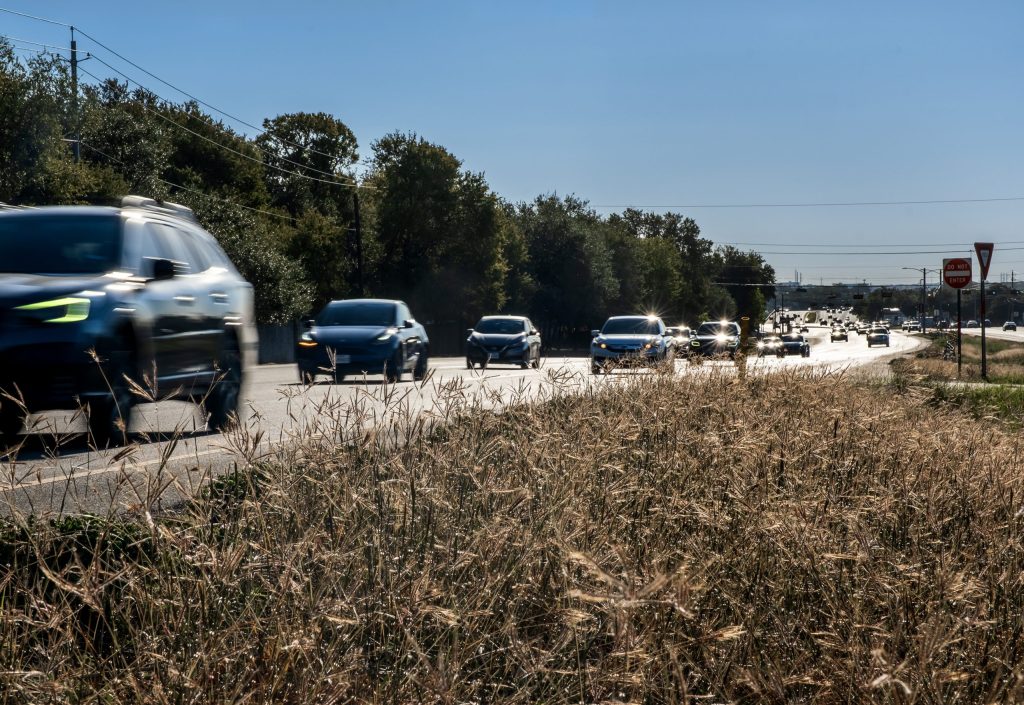
Plans to transform a heavily traveled road in northwest Austin into a highway are encountering pushback from city officials. Concerns have been raised about potential neighborhood division, risks to pedestrians and cyclists, and further entrenchment of car dependency in the area.
Local and state transportation agencies have been examining the segment of Parmer Lane from MoPac in Travis County to Whitestone Boulevard in Williamson County to propose improvements in a region marked by high traffic incidents. A preliminary recommendation for expanding Parmer into a highway with frontage roads has highlighted differing views on managing congestion while ensuring safety and promoting environmentally friendly transportation options.
The recommendation, discussed in September with the Capital Area Metropolitan Planning Organization (CAMPO), is not finalized and has drawn criticism from transportation advocates. They argue that building a new highway would be detrimental to Parmer Lane and to the city’s overall progress.
A letter from Connected Central Texas emphasized that a highway would compromise safety, increase noise and pollution, and generally make the area less accessible.
Council Member Krista Lane is advocating for a resolution that would encourage transportation planners to align with city policies prioritizing public transit and diverse transportation alternatives over an increase in vehicle lanes. If passed, the resolution would direct the city manager to coordinate with CAMPO and the Texas Department of Transportation (TxDOT) to explore plans that enhance pedestrian and cyclist safety by including features like trails and bike lanes along the road.
Lane expressed that early collaboration with TxDOT could foster a compromise that addresses community needs, despite the city’s limited regulatory capacity regarding state roads. She highlighted that the current preliminary plan entails converting Parmer into a highway with elevated lanes and multiple frontage roads, which could mirror issues seen on Interstate 35.
She noted that ample undeveloped land near Parmer Lane presents opportunities for dense residential construction. Promoting affordable and compact housing could conflict with a highway proposal, potentially diminishing property values for existing landowners.
The strategies proposed are still preliminary, with no established timeline for their implementation. CAMPO consultant Eric Busker mentioned that before any recommendations are realized, further environmental and feasibility studies are necessary, as well as discussions with local governments and property stakeholders.
Busker stated the necessity for improvements is clear, regardless of the highway development plan’s fate, as without changes, congestion on Parmer Lane is expected to worsen in the coming years. Suggested immediate enhancements include improved lighting, increased sidewalks, revised traffic signal timing, and extra turn lanes aimed at elevating safety in the area.
Matthew Ludlum, a resident near Parmer Lane in the Rattan Creek neighborhood, emphasized safety concerns, particularly for students crossing the busy road during peak times. He illustrated the danger of crossing at busy intersections like Parmer and McNeil.
Ludlum, alongside other community members, founded the Parmer Lane Alliance of Neighborhoods (PLAN) to advocate for pedestrian safety and address rising traffic issues in the area, which has limited transport options beyond cars. He remains open to whichever solution is pursued as long as it prioritizes community needs, reduces traffic noise, enhances pedestrian crossings, and incorporates non-automobile transport infrastructure.
Ludlum concluded, “Something is going to have to change.”



Comments
No comments yet.